
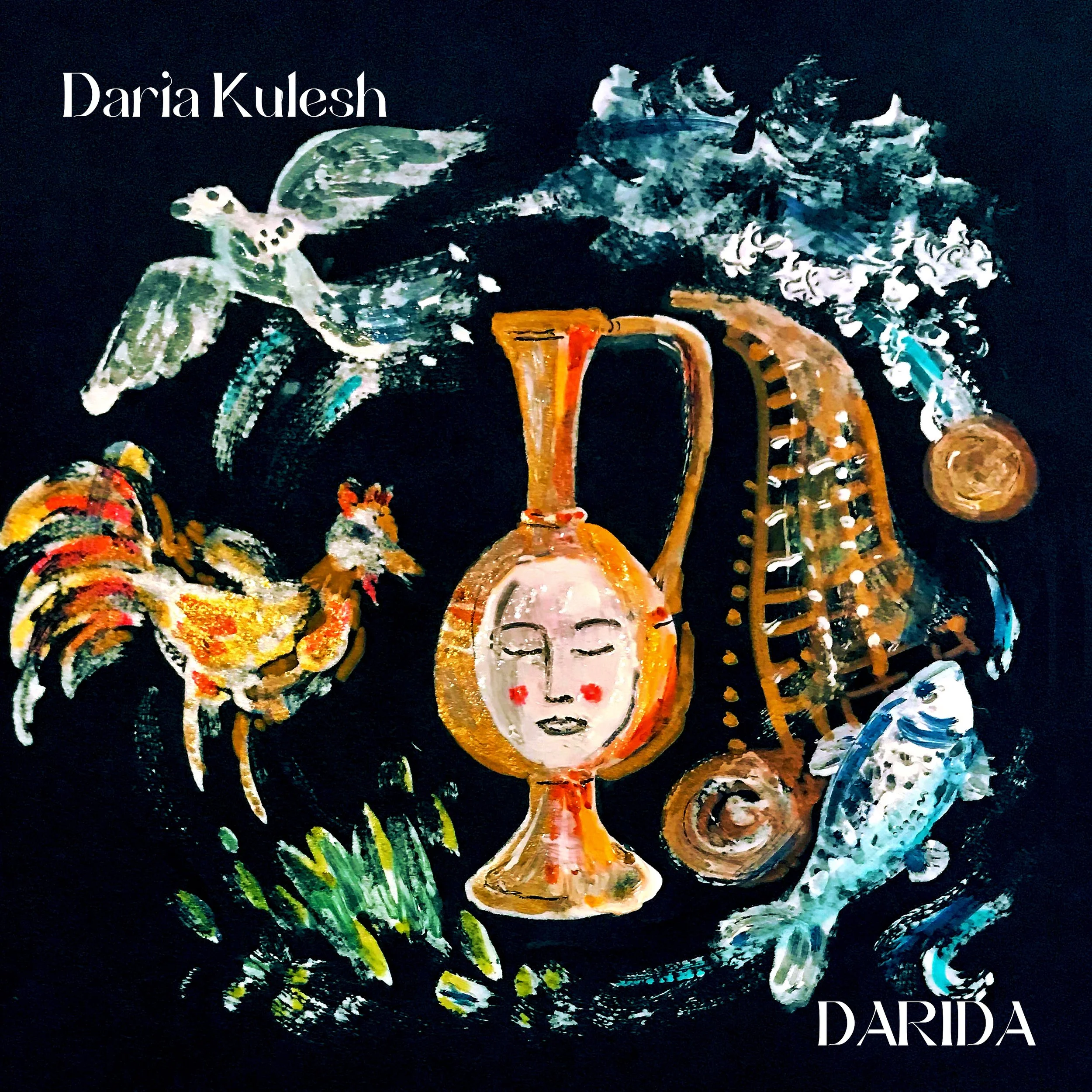
Daria Kulesh: Darida
Daria Kulesh Turns a Traditional Courtship Tale Into Something More Unsettling on ‘Darida’
by Jack Rush
There is something quietly unsettling about Darida, the new single from award-winning folk singer Daria Kulesh. Rooted in a centuries-old traditional song from Ingushetia in the North Caucasus, it tells a story of courtship, pursuit and shapeshifting, but Kulesh’s English translation and reinterpretation subtly shift the perspective, exposing the uncomfortable implications beneath what was once presented as playful folk entertainment.
Traditionally associated with a courtship ritual known as “Mock Courting,” the song emerged from social gatherings where young men and women exchanged teasing verbal challenges, with the man conventionally having the last word. Its alternative title, Try As You May, You Won’t Get Away, hints at a darker undertone. The narrative follows a wizard pursuing a witch through a shapeshifting chase as she repeatedly attempts to escape his advances. What might once have been understood as a comic exchange now raises more uncomfortable questions about agency, pursuit and the expectations placed on women.
The story has an intriguing counterpart in the British folk ballad The Two Magicians, also known as Bide, Lady, Bide or The Lusty Smith, where shapeshifting similarly becomes part of an escalating pursuit. The parallel offers a fascinating glimpse into how different folk traditions explore courtship, desire and power, but Kulesh’s interpretation is more than an exercise in cultural preservation or comparison.
Her connection to Darida is deeply personal. She first encountered the song during a visit to Ingushetia in 2016, while researching her family history and reconnecting with her grandmother’s homeland. Her grandmother, Fatima Akhrieva, had challenged convention by marrying outside her culture and faith, a decision that ultimately led to exile. Against that background, the story of a woman pursued, denied agency and expected to accept the outcome acquires an additional layer of significance. Kulesh doesn't rewrite the narrative entirely, but she changes the emphasis, placing the woman's perspective firmly at the centre rather than treating her resistance as a comic device.
Musically, producer Jason Emberton delivers an arrangement that moves with the narrative rather than simply providing a backdrop. Jonny Dyer’s bouzouki and Katrina Davies’ fiddle weave through the song, shifting in texture and intensity as the story unfolds. The arrangement is intricate without becoming overly elaborate, allowing Kulesh’s voice and the narrative to remain the focal point. Subtle sound design and field recordings further enhance the atmosphere, giving the song an almost cinematic quality without losing its folk roots.
Kulesh's vocal performance is particularly effective in conveying the tension between the song's traditional framing and its more troubling undertones. Rather than leaning into the theatricality of the original comic duet, she delivers the story with a measured presence that allows the listener to reconsider the dynamics at play. The result is not an overtly confrontational reinterpretation, but one that makes the discomfort difficult to ignore.
Darida succeeds precisely because it doesn't attempt to erase its historical context or transform the song into something unrecognisable. Instead, Kulesh preserves its narrative while subtly challenging the way it has traditionally been presented and understood. The shapeshifting may be fantastical, but the underlying question of who gets to choose, and who is expected simply to be chosen, remains all too real.
It is a thoughtful, atmospheric and quietly provocative reimagining of an old folk song, one that lingers well beyond its final notes. What once may have been a playful punchline now leaves a far more complicated aftertaste.
Have a listen and connect with Daria Kulesh: