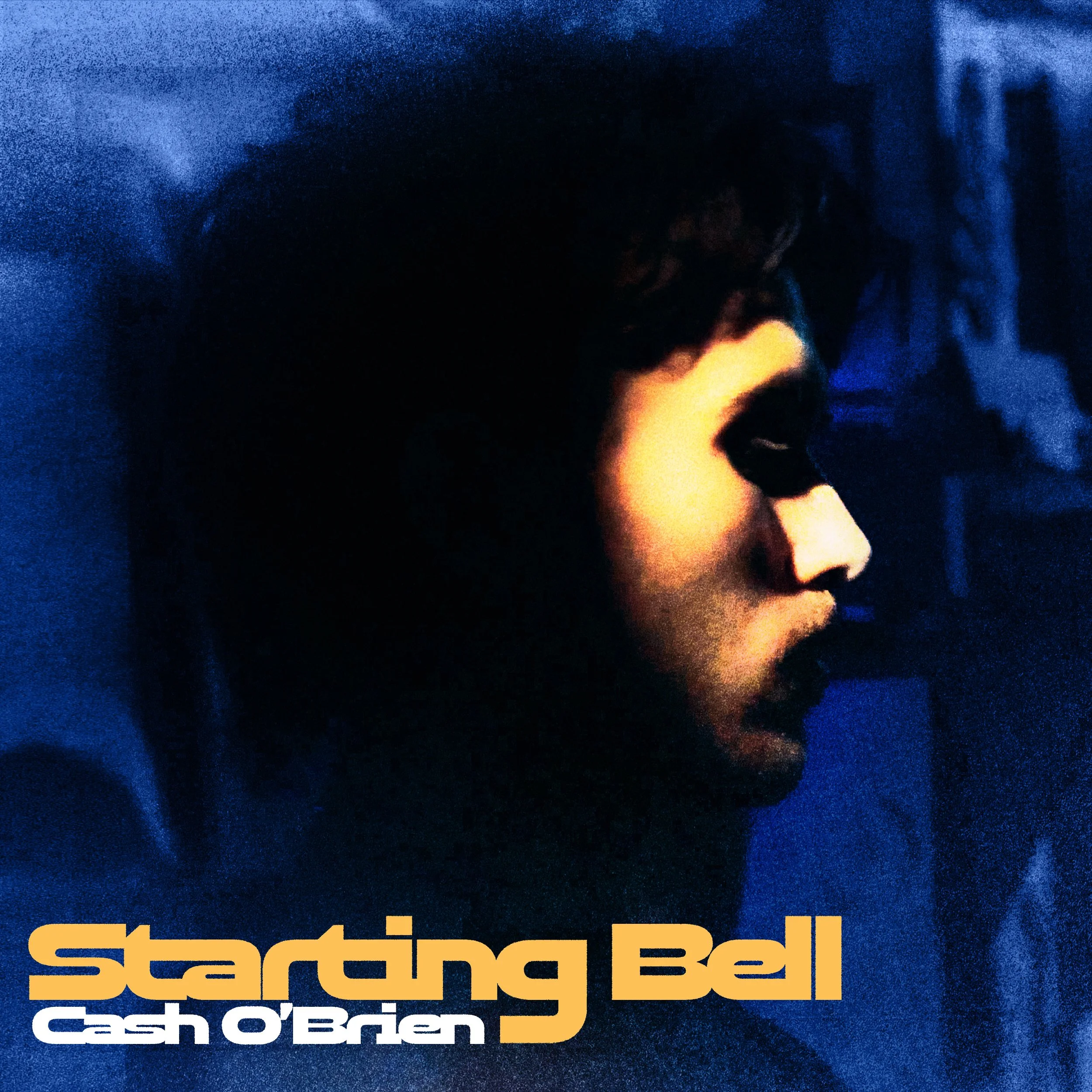
Cash O'Brien: Starting Bell
Cash O’Brien Runs Out the Clock on Starting Bell
by Jack Rush
There is a particular quiet that settles in a boxing corner between rounds. The fighter sits, the cutman works methodically, the clock keeps moving, and the decisive part of the night stays postponed. It looks like care. It functions as delay. On Starting Bell, Brooklyn songwriter Cash O’Brien turns that suspended moment into a seven-song meditation on modern relationships, emotional indecision and the uneasy balance between yearning and avoidance.
O’Brien is a 26-year-old songwriter, producer and multi-instrumentalist who has spent years developing his solo work while contributing to other artists’ projects, most notably composing for Frances Forever’s “Space Girl,” which went on to become a viral hit with hundreds of millions of streams. Starting Bell, however, is his own statement: a self-produced debut EP representing nearly three years of writing, recording and building a presence in New York’s indie scene. Across seven songs, he explores the complications of casual relationships, the persistence of old attachments and the difficulty of moving forward when part of you remains stuck in the past.
The title track establishes the EP’s central metaphor. “I wanna be in your corner / I wanna watch from the ring,” O’Brien sings, before observing, “When the starting bell will chime / I see you run out the clock for a while.” The image captures the contradiction running through the record: wanting connection while finding ways to avoid the moment when something has to change. Musically, bass and drums maintain a steady forward momentum, while the lyrics resist resolution. “I stand to lose if I put up a fight” becomes less a declaration than an admission of emotional paralysis. A brief piano passage gives way to the returning arrangement, the tension intact.
That same reluctance to confront an ending shapes “Don’t Stick Around,” one of the EP’s more affecting moments. “You can have me for a season / If you’ll be on your way” sounds like a preemptive attempt to control the inevitable, informed by the memory of an old flame who left on a plane. Beginning with acoustic guitar and spare piano, the track gradually opens up as O’Brien’s voice grows more urgent. “So promise you’ll go / Baby, please / Don’t stick around” transforms a seemingly casual arrangement into a plea for certainty, even if certainty means heartbreak.
“Velvet/Velour” explores the awkward transition from intimacy to polite distance. Its seemingly trivial details—the fabric, the color, the distinction between “one and the same” and “just pleasantries”—become shorthand for a relationship that has lost its spontaneity. “How’s this supposed to go?” repeats until the question itself becomes the song’s emotional center. Saturated guitars and synthetic textures gradually swell around O’Brien’s restrained delivery, reflecting the discomfort of trying to maintain appearances when the connection underneath has changed.
On “Cold Weather,” the emotional retreat takes the form of watching from the sidelines. “From the sidelines it looks better” and “I would never win” suggest the comfort of disengagement, even at the expense of participation. The arrangement remains measured and melancholy, with layered vocals and denser guitars lending weight to the final repetition. It is a recurring theme on Starting Bell: retreat can feel like protection, but it also comes with its own cost.
“Out on a Limb” is perhaps the most explicit expression of that imbalance. “I’ll take what is offered, content with a handful” describes settling for whatever scraps of affection are available, while the other person remains unwilling to fully commit. The song's measured arpeggios sustain the tension until O’Brien breaks into falsetto, pleading, “I’m begging for mercy, swing your axe through me.” It is an unexpectedly dramatic moment on a record otherwise defined by quiet introspection, and it underscores the emotional exhaustion of accepting less than you want.
“Kerosene” shifts the mood from resignation toward something more combustible. At a bar, surrounded by strangers, O’Brien finds himself wearing a version of himself he no longer recognizes: “Every stranger at the bar can see / I’ve put on a face that’s strange to me.” Rather than settling for ordinary affection, he reaches for something more extreme: “I want love, honey, I want kerosene.” The track begins with acoustic guitar and a sense of isolation, then builds into a wall of distorted guitars before returning to its quieter opening texture. The contrast is effective, capturing the tension between emotional numbness and the desire to feel something unmistakably real.
“Double Edge” closes the EP by bringing that stalemate into the everyday. An unaffordable dinner, a difficult discussion, feelings swallowed rather than expressed: “A discussion over a dinner that we can’t afford.” The admission “Well, I love you more than I’ve loved anyone” briefly breaks through the restraint, but the track ultimately leaves its resolution to a long instrumental passage, the guitar carrying the weight of a conversation that never quite reaches its conclusion.
Across its 23 minutes, Starting Bell draws from indie rock, pop, folk and R&B, with electronic textures and reverb playing an integral role in the sound. O’Brien's arrangements tend to begin in a contained space—acoustic guitar, clean electrics, understated piano, dark synth pads and a steady low end—before expanding as the emotional pressure builds. The reverb is more than a stylistic flourish; it creates a sense of distance and lingering resonance that suits the songs' themes. His vocals remain intimate and understated for much of the EP, occasionally opening into fuller harmonies or falsetto when the restraint finally gives way.
Starting Bell doesn't offer neat resolutions or dramatic breakthroughs. Instead, it captures the familiar contradictions of modern intimacy: wanting closeness but fearing commitment, holding onto the past while trying to move forward, and mistaking postponement for a solution. Cash O’Brien demonstrates a thoughtful songwriting instinct and a sensitivity to the small details through which relationships unravel. The bell may be waiting to ring, but on this debut, the waiting itself is the story.
Have a listen and connect with Cash O’Brien: