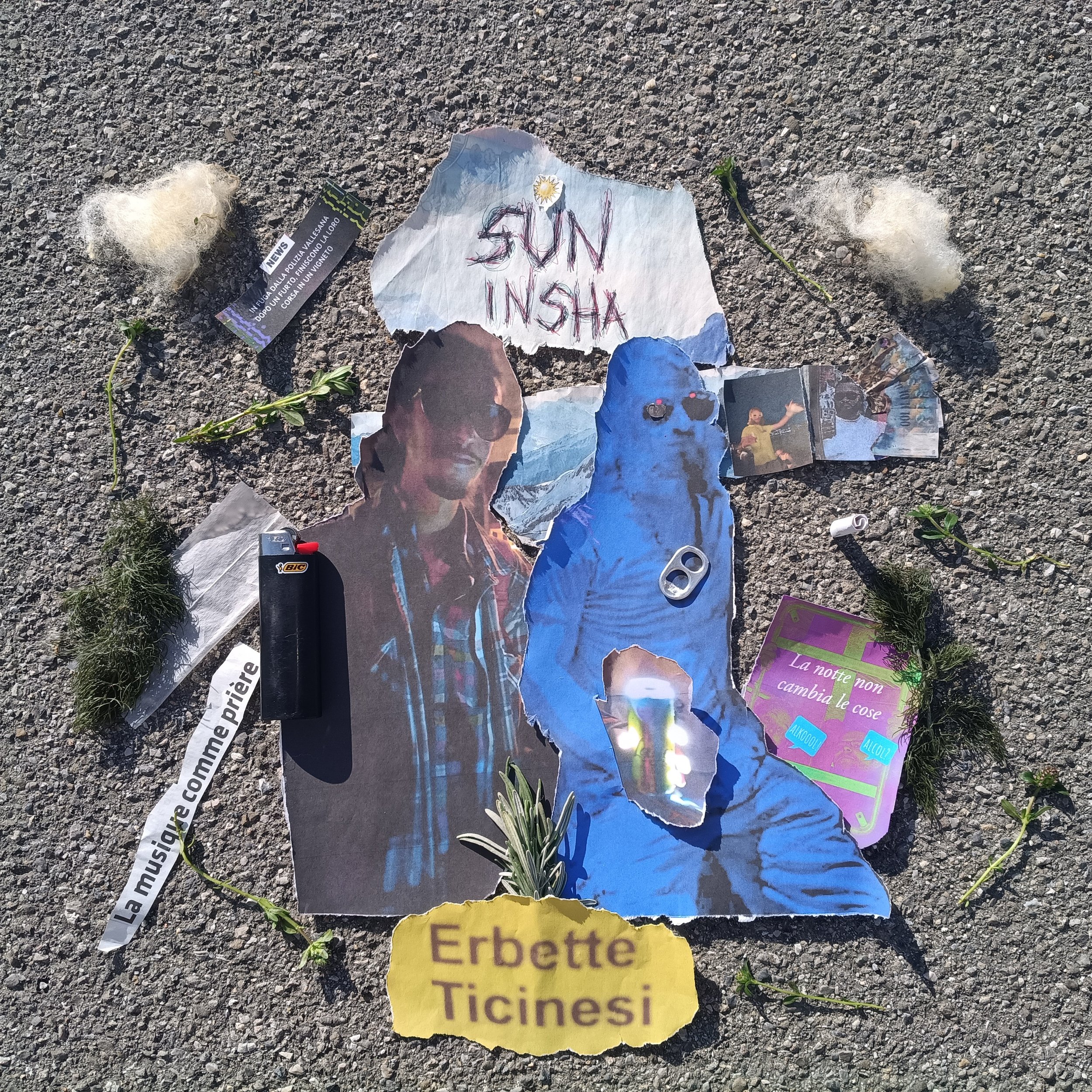
Sun Insha: Erbette Ticinesi
Erbette Ticinesi — A Lo-Fi Chronicle of Swiss-Italian Drift
by Jack Rush
Sun Insha is less a band than a lived-in experiment. Formed by a duo originally from Lugano and later relocated to Lausanne, their story unfolds across unlikely stages—churches, orchestras, and obscure storytelling nights in forgotten villages. Since high school, they’ve operated on the fringes of convention, slowly shaping a sound that resists categorization. Their name, “Sun Insha,” roughly translating to “They are here” in their dialect, feels less like a declaration and more like a quiet, persistent arrival.
Their album Erbette Ticinesi begins almost as a joke—sparked by a chance encounter with a spice packet in a hipster grocery store in Lausanne, exotically labeled as if Ticino itself were a distant curiosity. That irony becomes the album’s conceptual backbone. What follows is a hazy, fragmented chronicle of life split between Lugano and Lausanne: the instability of student life, the tension of cultural displacement, and the subtle absurdity of existing between identities in a society that doesn’t quite accommodate that in-betweenness.
What’s striking is how unpolished the project is—deliberately so. This was never intended as a “proper” album. It emerged from shared living, from boredom, from necessity. Recorded in a modest apartment during 2020, the project leans heavily into a DIY ethos, embracing limitations rather than masking them. There’s no pretense of perfection here—only an insistence on authenticity. Lyrics drift between Italian, dialect, and French, mirroring the fractured yet fluid identity the album seeks to express.
The creative process itself borders on ritualistic chaos. Sessions began not with structure, but with altered states and collective instinct. Ideas were shaped through listening, imitation, and eventual mutation. Tracks were built layer by layer—light percussions, deep basslines, spontaneous textures—without concern for how they might translate live. In fact, the duo openly dismisses the idea of reproducing this music on stage, unless backed by an improbable “orchestra of guitars and percussions.” The result is music that exists fully in its recorded form: messy, immersive, and unconcerned with performative constraints.
Beneath the humor and looseness lies a sharper critique. Erbette Ticinesi subtly pushes back against both the stereotyping of Ticino within Switzerland and the stagnation the artists perceive in its music scene—where repetition, gatekeeping, and insularity often dominate. Sun Insha’s response is simple: opt out. Using only what they had—a rehearsal room, basic equipment, and each other—they crafted something intentionally rough yet deeply personal.
Sonically, the album is a collage. Reggae and dub textures echo the legacy of Lee “Scratch” Perry and the Black Ark scene, while hip-hop influences—from A$AP Rocky to A Tribe Called Quest—blend with psychedelic rock sensibilities reminiscent of Spacemen 3. There are even cinematic undertones that recall Ennio Morricone, giving certain tracks a strangely expansive quality despite their lo-fi origins.
And yet, for all its influences, Erbette Ticinesi never feels derivative. It’s too specific, too rooted in a particular lived experience. This is music made without industry expectations, without polish, and without a clear destination. It’s inconsistent, occasionally self-indulgent—but also honest in a way that more calculated projects rarely achieve.
Sun Insha may not be trying to arrive anywhere. But in Erbette Ticinesi, they’ve captured something fleeting: the texture of a life in transit, suspended between places, languages, and identities.
Have a listen and connect with Erbette Ticinesi: